| Description | The Tomey Refractometer Keratometer and Topographer only in 1 unit senior citizens and children can also get the inspection with out any trouble because they dont have to move the seat for three measurements. | Experience 6 analyses in 1 device: refraction, keratometry, topography, tonometry, pachymetry and dry eye analysis. | The NIDEK OPD-Scan II provides information on corneal topography, wavefront, autorefraction, keratometry and pupillometry in one unit, utilizing state-of-the-art imaging and analysis technology developed specifically to measure normal to highly aberrated eyes. The system offers a variety of data maps to provide information on the total refractive error, wavefront, corneal shape, internal aberrations and visual quality of the eye, allowing highly accurate and reliable information for optic diagnostics. | The OPD-Scan III is an automated 5 in 1 instrument that combines topography, wavefront, autorefraction, keratometry, and pupillometry — allowing accurate and reliable analysis of corneal aberration. | CIRRUS 4000 delivers high-speed image capture with HD imaging detail and a wider field of view so you can make more informed decisions and spend more time with the patients who need it. | CIRRUS 6000 is the next-generation OCT from ZEISS, delivering high-speed image capture with HD imaging detail and a wider field of view so you can make more informed decisions and spend more time with the patients who need it.Learn how you can maximize patient throughput and practice efficiency with ZEISS CIRRUS 6000. |
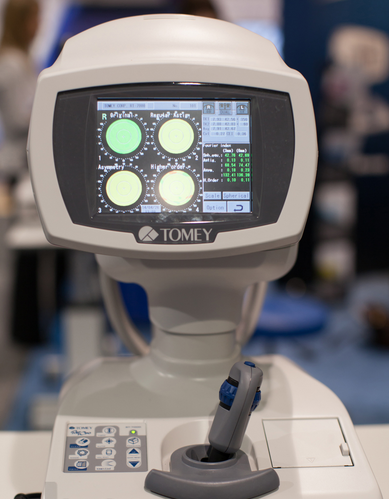
| Content | Tomey RT-7000 Autorefractor Keratometer Topographer
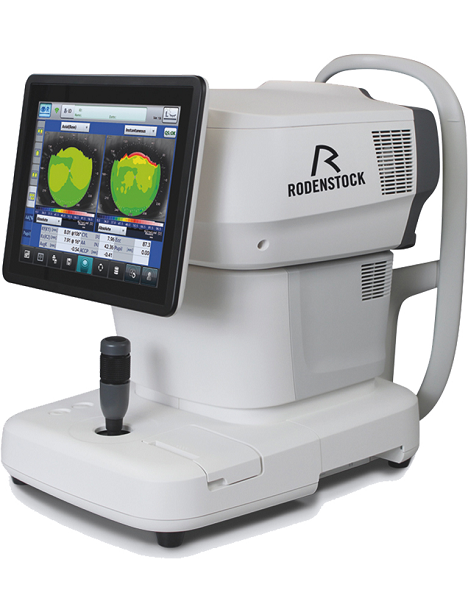
-Three Functions in One Instrument-Easy & Speedy Touch Screen Alignment-6.4 inches color TFT LCD-Dual CCD technology for Refractometry-IOL/ Cataract Mode-New incites for Keratometry KAI, KRI-Auto Alignment / Auto Shot of TopographyCorneal Topography– Auto Alignment / Auto ShotAny one can easily capture measurement with Auto Alignment and Auto Shot. The Measurement variation is significantly reduced no matter what the skill level is of the operator.CL Fitting Simulation-A pseudo-fluorescent pattern of the contact lens selected from the built-in data base can be confirmed and the fitting can be stimulated before the patient wears the trial lens.Corneal Eccentricity Index-The index of CEI (Corneal Eccentricity Index) indicates the ratio of flattering in percentage from the central cornea to the periphery.Three Function in One Instrument– Refractometer Keratometer and Topographer only in 1 unit senior citizens and children can also get the inspection with out any trouble because they don’t have to move the seat for three measurements. Switch from Ref-Kerato Mode to Corneal Topography Mode with only ONE TOUCH. The light come appears with only one button from the measuring head and the Ref-Keratometer is transformed to the topographer.Refractometry– Dual CCD technology for RefractometryTwo CCD cameras are used to capture images for observation and for measurement while providing highly accurate measurement data.Keratometory– New Indices for KeratometryThe Corneal Irregular astigmatism display function is installed to expand the possibility of Keratometer. This is the new function to measure the level of corneal irregular astigmatism which was difficult in the past.SPECIFICATIONSMeasurmentRangesRefraction MeasuremntSphere -25.00D to ±22.00DIVD=12.0mmCylinder 0D to ± 10.00DIVD=12.0mmAxis 0 to 180Corneal Curvature Measurement 5.00mm to 11.00mmMeasurement Zone 3mm R:8.00mmCorneal MappingDisplay Range 9 to 100 D-Normal Mode1.0 to 8.0mm (R:8.00mm)-Special Mode0.9 to 7.0 mm (R:8.00mm)Measurement TimeREF 0.2 SecondsKRT 0.1 SecondsMinimum Pupil Diameter 2.2mmMinimum Measurment Step Refraction MeasurementSphere 0.01DCylinder 0.01DAxis 1Corneal Curvature Measurement 0.01mmPD (Pupil Distance) 50mm to 86mmRecording Built-In Thermal PrinterVertex Distance 0mm, 12.0mm, 13.5mm, 14.0mm, 15.5mm, 16.0mmExterior Output (AN port / 4USB ports)Dimensions Tomey RT-7000 Autorefractor Keratometer TopographerHigh 466mmm or 18 InchesWidth 307mm or 12 InchesDepth 490mm or 19 InchesWeight Approx 20,000Kg / 44.4 PoundsDisplay 6.4 Inches color liquid crystalPower SupplyVoltage AC 100 to 240VFrequency 50/60 HzConsumption Power 120VA to 150VATemperature +10C to + 40CDisplay 30% to 75% | Rodenstock Alino Multifunction Refractometer
Tune-up your businessExperience 6 analyses in 1 device: Rodenstock Alino Multifunction Refractometer
Are you ready for something that is all-in-one, timesaving, space-saving and suits your business perfectly?Have a look at how powerful ALINO can be.6 in 1 solution01 RefractionHaving a good starting value for subjective refraction is essential. The QUICK REF MODE supports this even for uncooperative patients.02 KeratometryKAI (Kerato-asymmetry index) & KRI (Kerato-regularity index) give the first hint of possible irregularities on the cornea. This supports evaluation of the best vision correction or best-fitting contact lens.03 TonometryThe very gentle air puff created by a new generation of air-flow technology means that patients more readily accept the need for regular check-ups of the IOP measurement.04 PachymetryCorrecting the IOP by measuring the central corneal thickness is essential in interpreting the intraocular pressure.05 TopographyVarious topographic maps support you in carrying out vision screenings, contact lens fittings and in patient education.06 Dry EyeObserve the customers’ eye health and evaluate the long-term tolerability of contact lenses.Take advantage of the combination of tests:Additional servicesTonometry + PachymetryContact lens fitting andtolerance controlKeratometry + Topography + Dry EyeEye healthcareTopography + Tonometry + Pachymetry + Dry EyeSpecifications Rodenstock Alino Multifunction Refractometer
REFRACTIVE POWER MEASUREMENTSpherical refractive power (S) -30.00 D to + 25.00 D (at VD = 12.0 mm)Cylindrical power (C) 0.00 D to ± 12.50 D (at VD = 12.0 mm)Astigmatic axis (A) 0° to 180°KERATOMETRY MEASUREMENTCorneal curvature radius 5.00 mm to 13.00 mmCorneal astigmatic axis 0° to 180°INTRAOCULAR PRESSURE MEASUREMENTMeasurement range 1 mmHg to 60 mmHG (1 hPa to 80 hPa)PACHYMETRY MEASUREMENTMeasurement range 300 μm to 800 μmTOPOGRAPHY MEASUREMENTCorneal curvature radius 5.50 mm to 10.00 mmCorneal astigmatic axis 0° to 180°AUXILIARY FUNCTIONInterpupillary distance Measurement range: 20 mm to 85 mmCorneal diameter and pupil diameter Measurement range: 1.00 mm to 14.00 mmDry eye observation Blinking Analysis, Tear Meniscus height, Hyperemia, Meibomian glandsDATA MANAGEMENTInternal Database Integrated SD CardPrinter Integrated thermal printerData Output Type 3x USB 2.0, 1x LAN, 1x SD Card-slot, 1x WLANExport Format CSV, XML, JPG, PDFDIMENSIONS & ELECTRIC REQUIREMENTSDimensions WDH 312 × 491 × 450 mmWeight Approx. 23 kgVoltage 100 VAC to 240 VACFrequency 50/60 HzPower consumption 110 VA | Nidek OPD-Scan II ARK 10000 Autorefractor KeratometerThe OPD SCAN II is the only instrument that easily combines Wavefront, Topography and Refraction all into one unit that sits on a table top! This allows the isolation of any optical problem to cornea or crystalline lens making it easy to decide if lensectomy or corneal surgery is the procedure of choice. It is also very mobile if need be!The NIDEK OPD-Scan II provides information on corneal topography, wavefront, autorefraction, keratometry and pupillometry in one unit, utilizing state-of-the-art imaging and analysis technology developed specifically to measure normal to highly aberrated eyes. The system offers a variety of data maps to provide information on the total refractive error, wavefront, corneal shape, internal aberrations and visual quality of the eye, allowing highly accurate and reliable information for optic diagnostics.Our units are carefully refurbished, inspected and serviced by our trained technician prior to shipment. We also offer service on almost all Nidek equipment! ARK-10000 measures the refractive condition and analyzes corneal shape of the patient’s eye. The refractive condition is measured by weak infrared rays, and corneal shape is analyzedbased on projected placido rings onto the cornea. FinancingWe offer easy and flexible financing options on new and used ophthalmic equipment, including, Bausch & Lomb, Visx, Zeiss Humphrey, Topcon, Canon, Alcon and more! Maximize your budget and improve your bottom line with Laser Locators easy equipment financing plan. We have partnered with Stearns Bank to provide financing to our customers. Features Nidek OPD-Scan II ARK 10000 Autorefractor Keratometer
– OPD Map shows point by point aberration of patient’s eye in diopters
– Measurement Selection for Improved Reliability
– Fast Processing Speed
– Improved Accessibility to a Patient eye
– Wide Measurement Range
(Sphere -20.0 to +22.0D and Cylinder 0.0 to ±12.0D)
– Easy Data Maintenance with a Detachable HDD
– Network Capabilities
– Corneal NavigatorCorneal Navigator | Nidek OPD-Scan III Corneal AnalyzerComprehensive vision analysis
OPD-Scan III VS is a device that mainly measures corneal shape (topographer) and refractive error (refractometer).
It clarifies causes of vision difficulties through wavefront analysis of information measured over a wide area.
Solutions for face-to-face consultingTablet viewer provides four kinds of easy-to-understand reports for explanation and consulting.
*The tablet is not included or sold with the OPD-Scan III VS.
Basic information reportBasic information to generally judge the patient’s eye conditions.
Topography reportIntuitive maps and numerical data for comprehending the corneal surface.
Simulation reportVisual performance simulations and MTF graphs for a variety of conditions.
Eye diagram image reportEye model to visually understand eye conditions ranging from eye fundus to cornea.
Wide range of display patterns
  Placido image
 Axial map (Additional indication)
 Visual Acuity map (Image charts)
Features Nidek OPD-Scan III Corneal Analyzer- Five-in-One true refractive workstation for all practitioners
- Overview summary for optimal clinical decisions
- A number of summaries
- Wider measurement area
- Greater topography resolution, blue placido rings
The OPD-Scan lll is the Five-in-One true refractive workstation combining - Wavefront Aberrometer
- Topographer
- Auto Refractometer
- Auto Keratometer
- Pupillometer and Pupillographer
- Irregularity helps determine the best strategy for vision correction. Separation into Total, Corneal and Internal components allows determination of the source of the optical pathology.
- PSF images of OPD, Axial, and Internal OPD map simulate objective retinal visual quality from each component of the eye for easy clinical assessment and patient education.
- Corneal Spherical Aberration aids in the selection of aspheric IOLs and contact lenses.
- Color coded Classification Indices help identify post-LASIK corneas and Keratoconus.
- The Astigmatism index aids the implantation of toric IOLs such as incision placement and lens alignment.
- A retroillumination image of cataracts captured during the OPD exam allows better understanding of pupillary effects on vision and in patient education.
| Carl Zeiss Cirrus HD-OCT 4000
The Cirrus HD-OCT is a non-contact, high resolution tomographic and biomicroscopic imaging device. It is indicated for in-vivo viewing, axial cross-sectional, and three-dimensional imaging and measurement of anterior and posterior ocular structures, including cornea, retina, retinal nerve fiber layer, ganglion cell plus inner plexiform layer, macula, and optic nerve head. The Cirrus normative databases are quantitative tools for the comparison of retinal nerve fiber layer thickness, macular thickness, ganglion cell plus inner plexiform layer thickness, and optic nerve head measurements to a database of normal subjects. The Cirrus HD-OCT is intended for use as a diagnostic device to aid in the detection and management of ocular diseases including, but not limited to, macular holes, cystoid macular edema, diabetic retinopathy, age-related macular degeneration, and glaucoma.The ZEISS Certified Factory Direct Cirrus 4000 HD-OCT also includes the full Accessory Kit
External Fixation Light
Test Eye
Mini Keyboard
Optical Mouse
Dust Cover
Metric 5A/250v Fuse
14 Ft. CAT 5e Network Cable
USB Cable
IEC 320 to NEMA 12 inch Power Cable
IEC 320 39in. Power Cable
Install Disc including Roxio Basic
Symbol Sheet
OCT Primer Guide
Quick Start GuideHD-OCT ImagingMethodology: Spectral Domain OCT
Optical Source: superluminescent diode (SLD), 840 nm
Optical Power: < 725 μW at the cornea
Scan Speed: 27,000 A-scans per second
A-Scan depth: 2.0 mm (in tissue), 1024 points
Axial resolution: 5 μm (in tissue)
Transverse resolution: 15 μm (in tissue)Zeiss Cirrus HD-OCT 4000 OCT Spectral Domain OCT HD Fundus ImagingMethodology: Line scanning ophthalmoscope
Live Fundus Image: During alignment and during OCT scan
Optical Source: Superluminescent diode (SLD), 750 nm
Optical Power: < 1.5 mW at the cornea
Field of View: 36 degrees W x 30 degrees H
Frame rate: >20 Hz
Transverse resolution: 25 μm (in tissue)Carl Zeiss Cirrus HD-OCT 4000 Iris ImagingMethodology: CCD Camera
Resolution: 1280 x 1024
Live iris image: During alignmentElectrical, Physical and EnvironmentalWeight: 38kg (83 lbs)
Dimensions: 65L x 44W x 53H (cm)
Fixation: Internal, external
Internal fixation focus adjustment: -20D to +20D (diopters)
Input devices: Keyboard, mouse
Electrical rating (115V) Single Phase, 100/120V~ systems:50-60Hz, 5A
Fuse rating (115V) T 5A 250V
Electrical rating (230V) Single Phase, 220/240V~ systems:50-60 Hz, 2.5A
Fuse rating (230V) Fuse rating: T 5A 250V
Convenience Receptacle output ratings 115V~, 0.5 A Max, 50-60 Hz
Temperature (transport and storage) -40º to +70º C
Relative humidity (transport and storage) 10% to 100%, including condensation
Atmospheric pressure (transport and storage): 500 hPa to 1060 hPa
Temperature (operation) +10º to +35º C
Relative humidity (operation) 30% to 75%, excluding condensation
Atmospheric Pressure (operation) 700 hPa to 1060 hPa | New ZEISS CIRRUS 6000 – 100 kHz OCT Imaging SystemAt 100,000 scans per second, ZEISS CIRRUS 6000 enables clinicians to image a larger field of view up to 12mm in a single scan. It also captures high-defintion (HD) OCT and OCT Angiography (OCTA) scans, revealing the finer microvascular details of the retina and providing more insight into your patient’s condition. AngioPlexOCT Angiography from ZEISS ushers in a new era of eye care with non-invasive imaging of retinal microvasculature—taking glaucoma and retinal disease management and treatment planning to the next level. By offering the industry’s most comprehensive tools for assessing and analyzing a range of pathologies, ZEISS provides a complete OCT Angiography (OCTA) solution. CIRRUS 6000 is the latest addition to an already robust portfolio of OCT devices that are designed to meet the needs of all types and levels of practices and/or clinicians. It offers customers high-speed and high-throughput to help manage their large patient volume faster, all while improving imaging and image quality. “This system was designed with the patient in mind, enabling doctors to continue accessing their patient data from CIRRUS devices that are crucial to effective long-term patient care,” said Jim Mazzo, Global President of Ophthalmic Devices at Carl Zeiss Meditec. “We are committed to our customers and believe this will become an essential asset to their practice.”The 100kHz speed of the CIRRUS 6000 allows clinicians to scan patients faster, with increased efficiency and improved imaging detail. Additional features include: - Wider and deeper OCT/OCTA scans with 12x12mm OCTA and B-scan depth up to 2.9mm
- HD AngioPlex scan is a new scan type that provides more detail
- New workflow protocols to aid in increasing efficiency
- Patient-friendly “Wellness report” to help educate the patient
According to retina and vitreoretinal physician and surgeon Gregg T. Kokame, MD, of Retina Consultants of Hawaii, the new ZEISS CIRRUS 6000 is extremely fast and impressive. “With the new scan acquisition time of 100,000 per second I can scan and assess my patients much quicker, giving me the details I need with every image,” says Kokame.“ZEISS is dedicated to advancing eye care through development of new and innovative solutions, like the CIRRUS 6000,” said Dr. Ludwin Monz, President and CEO of Carl Zeiss Meditec AG. “With our comprehensive diagnostics portfolio, we will continue to create better vision standards to benefit patients today and in the future.” |





Reviews
There are no reviews yet.