| Description | The Auto “Refkeratometer” RC-800 is the latest in economical, user-friendly, highly accurate auto “refkeratometry”. The RC-800 provides simple, easy measurement by the operator at an economical cost, without compromising accuracy or reliability. | In recent years, the medical aesthetic industry has seen rapid growth in the number of body sculpting and body contouring procedures performed. The trend is projected to continue growing with the overall market growth of 16.3% year over year through 2020.Sculpting With Open ArmstruSculpt iD offers a unique and personalized approach to improve upper arm contouring and definition. Unlike other devices, there is no placement limitation, it is easy to set up, and fast to treat. Provide your patients improved freedom to open their arms and wear sleeveless shirts with confidence.- Unique approach to treat skin with laxity
- Sculpt challenging areas
- Synchronized treatment zones
- No downtime
| Topcon KR 8800 autorefractor keratometer has been checked and certified by an authorized Topcon technician. | The OPD-Scan III is an automated 5 in 1 instrument that combines topography, wavefront, autorefraction, keratometry, and pupillometry — allowing accurate and reliable analysis of corneal aberration. | New Handpiece Design The Optima – 518 Classic is the first model to use the new Mark II which enables a multipurpose handpiece:
* Faster treatments – up to 0.5 Seconds Between pulses.
* Real-time handpiece temperature control.
* Contemporary and stylish design.
* Light weight design – 25% less weight to improve the therapists’ comfort. | Experience 6 analyses in 1 device: refraction, keratometry, topography, tonometry, pachymetry and dry eye analysis. |
| Content | Tomey RC-800 Auto Refractor Keratometer
Refractometry: Simple handling of the fine adjustment and measurement by yourself. Fogging is applied automatically for each measurement for more accurate results.Keratometry: Short consecutive measurements and time provide reliable data. Measurements at φ3.0mm (R = 8.0mm) give you enough information for contact lens fitting.Diameter Measurement of Cornea and Pupil: Easy measurement by moving the two cursors on the display to the boundaries of Cornea or Pupil.Language Selection: RC-800 has a Multi-language function. You can select your required language from “English”, “Japanese”, “German”, “Chinese”, “Spanish”, “Spanish Latin America”, “Italian”, “Portuguese”, “French” and “Russian”.Features:• Highly Accurate
• Simple to Use
• Diameter Measurement of Cornea and Pupil
• High Speed Printer
• Auto Shot
• Color Touch Screen
• USB connection
• Large Patient Database
• Easy Database Operation
• Multi-Language Operation
• Fourier Refractive Analysis
• Quick Data Reference
• Built-in LCD Alignment
• Keratoconus Screening & Other ApplicationsMeasurement Ranges:Refraction:• Sphere: -25.00D to +22.00D (VD=12.0mm)
• Cylinder: 0D to ±10.00D (VD=12.0mm)
• Axis: 0° to 180°
• Minimum Pupil Dia: Ø2.0mm
• Measurement time: 0.2 second/single eye (data taking time)Keratometry:• Range: 5.00mm to 11.00mm
• Corneal Refraction: 30.68D to 67.50D (n=1.3375)
• Corneal Astigmatism: 0D to 10D (n=1.3375)
• Axis: 0° to 180°
• Measurement area: Ø3mm (at 8.00mm corneal curvature)
• Measurement time: 0.1 second/single eye (data taking time)Other features:Tomey RC-800 Auto Refractor Keratometer• PD Measurement range 50 to 86mm
• Corneal diameter measurement
• Measurement range: 10.0 to 14.0mm
• Display unit: 0.1mm
• Pupil diameter measurement
• Measurement range: 1.0 to 10.0 mm
• Display unit: 0.1mm
• Built-in Printer Thermal printer
• Data output type RS232C / USB-D
• Display 5.7 inch color liquid crystal display
• Dimensions and weight 297(W)x 500(D) x 448(H)mm
• Approx. 17kg
• Power Requirements AC 100V to 240V, 50 / 60 Hz, 80VA to 100VAThe Auto “Refkeratometer” RC-800 is the latest in economical, user-friendly, highly accurate auto “refkeratometry”. The RC-800 provides simple, easy measurement by the operator at an economical cost, without compromising accuracy or reliability. | 2020 Cutera Trusculpt iD Monopolar RF Body ContouringPersonalized Body Sculpting:truSculpt iD is the latest body sculpting treatment solution from Cutera, providing a personalized, hands-free and hand-held solution to revolutionize your practice. This powerful, non-invasive, Monopolar RF platform tailors to patients’ individual needs and features Real-Time Temperature Control for clinically proven results, safety, and patient experience. truSculpt iD treats the entire fat layer, resulting in an average of 24% fat reduction.It offers unique handpiece and placement location versatility and customized 15-minute protocols to treat a full abdomen or multiple body areas simultaneously.Sculpting With Open ArmstruSculpt iD offers a unique and personalized approach to improve upper arm contouring and definition. Unlike other devices, there is no placement limitation, it is easy to set up, and fast to treat. Provide your patients improved freedom to open their arms and wear sleeveless shirts with confidence.- Unique approach to treat skin with laxity
- Sculpt challenging areas
- Synchronized treatment zones
- No downtime
Sculpting To Get A Leg Up
Thighs are commonly out of proportion with the rest of the lower body causing growing interest in leg sculpting. truSculpt iD offers an individualized and unmatched solution to regain proportion to inner and outer thighs of all shapes and sizes. Give your patients a leg up and the desire to flaunt their youthful shape.- Versatile to treat various tissue densities
- Tailored for areas large and small
- Flexible treatment configurations
- Immediately resume normal activities
truSculpt iD Technology
truSculpt iD provides an innovative RF technology that delivers clinically proven results to expand your body sculpting business. The system versatility allows for customized treatments to multiple body areas simultaneously based on patients need in as little as one 15-minute treatment protocol.Radiofrequency (RF) Energy
truSculpt iD delivers heat to the entire fat layer while maintaining a comfortable skin temperature – optimizing clinical efficacy and maintaining patient comfort. | Topcon KR-8800 Autorefractor Keratometer
The Topcon KR-8800 Autorefractor Keratometer features fast, easy and accurate measurements. The Topcon KR-8800 Autorefractor Keratometer also offers a 20% wider measurement range, a color LCD screen, and a 2.0mm minimum pupil diameter. Fast and accurate refraction and keratometry readings are also standard on the KR-8800, as well as a new color LCD screen. The Topcon KR-8800 Autorefractor Keratometer offers Rotary Prism measurement for enhanced accuracy. Other features offered on the Topcon KR-8800 Autorefractor Keratometer are simultaneous display of binocular readings, scenic fixation chart, USB connection for fast data transfer, and auto fire mode for fast reliable data collection.Simultaneous Display of Binocular Readings
The new color LCD monitor simultaneously displays the readings of both right and left eyes so that the operator can instantly observe all of the pertinent information.Wider Measurement Range
The new 8800 series’ wider range allows measurements to be obtained on patients with up to 10D of astigmatism.Rotary Prism Measurement System
The new 8800 series features Topcon’s exclusive Rotary Prism Technology for unmatched accuracy and reliability. The off-centered ring target is able to measure areas that may be occluded by a small diameter pupil. The prism angle enables a much wider area of the retina to be measured. As a result, the measurement image provides extremely reliable data.Faster Measurement Topcon KR-8800 Autorefractor Keratometer
The 8800 series are among the fastest auto refractors in the world. A specially designed CPU enables the 8800 series to significantly reduce the measurement time.Scenic Fixation Chart
The scenic color chart makes eye fixation easier and is adjustable in two brightness levels for optimal measuring results with either large or small pupils.Auto Measurement
As soon as the KR-8800 is properly aligned, this innovative function initiates the measurement process and completes three readings of each eye providing that proper alignment is maintained.Cornea Diameter Measurement
Corneal diameter can be measured either during testing of the patient or later by recalling the image of the cornea on the monitor. | Nidek OPD-Scan III Corneal AnalyzerComprehensive vision analysis
OPD-Scan III VS is a device that mainly measures corneal shape (topographer) and refractive error (refractometer).
It clarifies causes of vision difficulties through wavefront analysis of information measured over a wide area.
Solutions for face-to-face consultingTablet viewer provides four kinds of easy-to-understand reports for explanation and consulting.
*The tablet is not included or sold with the OPD-Scan III VS.
Basic information reportBasic information to generally judge the patient’s eye conditions.
Topography reportIntuitive maps and numerical data for comprehending the corneal surface.
Simulation reportVisual performance simulations and MTF graphs for a variety of conditions.
Eye diagram image reportEye model to visually understand eye conditions ranging from eye fundus to cornea.
Wide range of display patterns
  Placido image
 Axial map (Additional indication)
 Visual Acuity map (Image charts)
Features Nidek OPD-Scan III Corneal Analyzer- Five-in-One true refractive workstation for all practitioners
- Overview summary for optimal clinical decisions
- A number of summaries
- Wider measurement area
- Greater topography resolution, blue placido rings
The OPD-Scan lll is the Five-in-One true refractive workstation combining - Wavefront Aberrometer
- Topographer
- Auto Refractometer
- Auto Keratometer
- Pupillometer and Pupillographer
- Irregularity helps determine the best strategy for vision correction. Separation into Total, Corneal and Internal components allows determination of the source of the optical pathology.
- PSF images of OPD, Axial, and Internal OPD map simulate objective retinal visual quality from each component of the eye for easy clinical assessment and patient education.
- Corneal Spherical Aberration aids in the selection of aspheric IOLs and contact lenses.
- Color coded Classification Indices help identify post-LASIK corneas and Keratoconus.
- The Astigmatism index aids the implantation of toric IOLs such as incision placement and lens alignment.
- A retroillumination image of cataracts captured during the OPD exam allows better understanding of pupillary effects on vision and in patient education.
| Active Optical Systems Optima 518 IPL LaserHandpiece (Standard):Multipurpose Wavelength Mark-II
Handpiece (Optional):Facial Treatments
Pulse Interval/Repetition Rate:0.5 – 2 Seconds
Maximum Output Treatment Pattern:22 Joule /cm 2
Output Power:11-31 Joule / cm 2 , up to 4000 W
Cooling System:Improved Air Cooling
Control:Advanced Software Interface
Lamp’s Life Span:200,000 Flashes (minimum)
Treatment Area/Spot Size:15 x 50 mm, (7.5 cm 2)
Wavelength:420 – 1,100 nm
Weight:88.18 lbs (40Kg) (including stand)
Dimensions:17.32 inches x 17.72 inches x 39.37 inches (44cm x 45cm x 100cm)
Mains:220-230 VAC, 50/60 Hz; 100-120 VAC, 50/60 Hz
Max Mains Power:600 VA
Treatments Variety:
Skin Rejuvenation
Pigmentation Treatment
Acne Treatment
Hair Removal
Hair Removal – Deep Follicles
Hair Removal – Sensitive Skin
Vascular (Facial) Treatment
Tattoo Removal
The Laser uses 12 preset programs. The programs are set in a consecutive, energy intensity increasing order, as specified by the tables of settings, covering all types of hair and skin combinations to be treated.
12 Programs
1 – Very Dark Skin, Fitzpatrick Skin Type IV
2 – Dark Skin, Fitzpatrick Skin Type IV
3 – Dark Skin, Fitzpatrick Skin Type III
4 – Dark Skin, Fitzpatrick Skin Type III
5 – Medium Skin, Fitzpatrick Skin Type II
6 – Medium Skin, Fitzpatrick Skin Type II
7 – Light Skin, Fitzpatrick Skin Type II
8 – Light Skin, Fitzpatrick Skin Type I
9 – Very Light Skin, Fitzpatrick Skin Type I
10 – Very Light Skin, Fitzpatrick Skin Type I
11 – Very Light Skin, Fitzpatrick Skin Type I
12 – High Power, Fitzpatrick Skin Type IOptima-518-Classic Active Optical Systems Optima 518 IPL LaserThe Optima – 518 Classic was designed to answer the needs of sophisticated practitioners who want to provide state of the art treatment to their patients on one hand, based on proven and tested treatment protocols and on the other hand to have the ability to reach new and improved protocols by conducting innovative clinical investigations.The Optima – 518 Classic, based on active’s GEM-PL technology, sets the pulse pattern according to the selected treatment type, skin color, skin photosensitivity and treatment depth. The treatment protocols and different pulse patterns take into account the tissue’s TRT (Thermal Relaxation Time) and the combined knowledge accumulated from thousands of treatments done during the years and clinical investigations done to confirm the findings.New Handpiece Design The Optima – 518 Classic is the first model to use the new Mark II which enables a multipurpose handpiece:
* Faster treatments – up to 0.5 Seconds Between pulses.
* Real-time handpiece temperature control.
* Contemporary and stylish design.
* Light weight design – 25% less weight to improve the therapists’ comfort.Research program for clinical investigations, the self setting program allows researchers to set the treatment’s parameters according to their needs. Allowing advanced research with the device. The energy levels in the self setting program can reach 31J cm 2 with high intensity of 4000 W.Approvals
* CE MDD Intl. Medical Standard
* FDA U.S. Safety Standard
* ISO-13485 Med. Production STD
* IEC 60-601-1 Medical Safety STD
* CFS Gov. Health Approval
* CSA Can. & U.S. Safety App
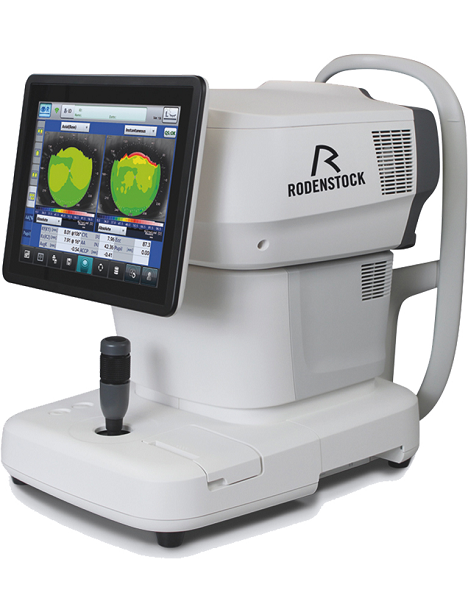
* TGA Australian health STD. | Rodenstock Alino Multifunction Refractometer
Tune-up your businessExperience 6 analyses in 1 device: Rodenstock Alino Multifunction Refractometer
Are you ready for something that is all-in-one, timesaving, space-saving and suits your business perfectly?Have a look at how powerful ALINO can be.6 in 1 solution01 RefractionHaving a good starting value for subjective refraction is essential. The QUICK REF MODE supports this even for uncooperative patients.02 KeratometryKAI (Kerato-asymmetry index) & KRI (Kerato-regularity index) give the first hint of possible irregularities on the cornea. This supports evaluation of the best vision correction or best-fitting contact lens.03 TonometryThe very gentle air puff created by a new generation of air-flow technology means that patients more readily accept the need for regular check-ups of the IOP measurement.04 PachymetryCorrecting the IOP by measuring the central corneal thickness is essential in interpreting the intraocular pressure.05 TopographyVarious topographic maps support you in carrying out vision screenings, contact lens fittings and in patient education.06 Dry EyeObserve the customers’ eye health and evaluate the long-term tolerability of contact lenses.Take advantage of the combination of tests:Additional servicesTonometry + PachymetryContact lens fitting andtolerance controlKeratometry + Topography + Dry EyeEye healthcareTopography + Tonometry + Pachymetry + Dry EyeSpecifications Rodenstock Alino Multifunction Refractometer
REFRACTIVE POWER MEASUREMENTSpherical refractive power (S) -30.00 D to + 25.00 D (at VD = 12.0 mm)Cylindrical power (C) 0.00 D to ± 12.50 D (at VD = 12.0 mm)Astigmatic axis (A) 0° to 180°KERATOMETRY MEASUREMENTCorneal curvature radius 5.00 mm to 13.00 mmCorneal astigmatic axis 0° to 180°INTRAOCULAR PRESSURE MEASUREMENTMeasurement range 1 mmHg to 60 mmHG (1 hPa to 80 hPa)PACHYMETRY MEASUREMENTMeasurement range 300 μm to 800 μmTOPOGRAPHY MEASUREMENTCorneal curvature radius 5.50 mm to 10.00 mmCorneal astigmatic axis 0° to 180°AUXILIARY FUNCTIONInterpupillary distance Measurement range: 20 mm to 85 mmCorneal diameter and pupil diameter Measurement range: 1.00 mm to 14.00 mmDry eye observation Blinking Analysis, Tear Meniscus height, Hyperemia, Meibomian glandsDATA MANAGEMENTInternal Database Integrated SD CardPrinter Integrated thermal printerData Output Type 3x USB 2.0, 1x LAN, 1x SD Card-slot, 1x WLANExport Format CSV, XML, JPG, PDFDIMENSIONS & ELECTRIC REQUIREMENTSDimensions WDH 312 × 491 × 450 mmWeight Approx. 23 kgVoltage 100 VAC to 240 VACFrequency 50/60 HzPower consumption 110 VA |




Reviews
There are no reviews yet.