| Description | Features- NEW TruFit 3D Virtualization allows you to simulate the lens inside the frame before edging, allowing you to minimize retouches and maximize your profit.
- One of the fastest lens edgers on the market.
- Process nearly any job type to avoid having to send out costly jobs to labs.
- Superior quality of finish and polish provides a premium look and feel that you can be proud of.
- Smart Design shape customization.
Wavefront Power-mapping technology for lens analysis and verification.
- Shelf Bevel to easily process high base-curve wrap frames.
- TruScan High base curve frame tracing
| Complete Control of Lens Mounting
- Optimal monitoring of all trajectories, irrespective of finishing materials or shapes
- Absolute axis control thanks to hybrid edging technology: grinding + milling
- Ideally suited for quality finishing even on highest base curves
- Fast and accurate drilling with data acquired in a single operation
- Automatic centering and blocking for simple operation
| The KAISER HFR 8000 Frame Tracer is where efficiency meets versatility, providing efficiency that today’s retail practices require.
The HFR-8000 is part of the widely-acclaimed KAIZER line. KAIZER is the next generation to follow the Huvitz Excelon series and is designed with a wide array of features intended to simplify and perfect in-house lens finishing. The HFR-8000 is a fully automatic frame tracer that performs 3-dimensional tracing. This material-friendly unit can be used in virtually every situation. It provides fast and adaptable tracing for all frame materials and shapes. In fact, it is capable of scanning and digitally filtering 16,0000 points of shape data. The HFR-8000 also features Huvitz Mechatronic Technology. This built-in stereoscopic scan technology provides accurate tracing even on high curve frames. The HFR-8000 is a perfect accompaniment to the HPE-8000 Edger and offers flexibility, precision and quality that can’t be beat. | With California, Optos has incorporated new hardware and software technology enabling practitioners to see more, discover more and effectively treat more ocular pathology thus promoting patient health.In addition to the benefits found with all of the UWF devices from Optos such as 200 degrees or up to 82% of the retina captured in a single image, in multiple modalities, as well as eyecare professionals being able to see 50% more of the retina when compared to other conventional imaging devices, California rg, offers the following benefits:– Motorized head and chin rest to more easily assist those patients requiring additional assistance during imaging– Multiple imaging modalities including; 3-in-1 color depth imaging (color, red-free and choroidal in a single image) as well as
Autofluorescence | The simplicity is another advantage
Energy-saving and auto-sensing feature will surprise you
White & Black colors are available
1. Compact and sleek design with luxurious feel
Simple, and it makes your work environment look great
2. Adjustable LED intensity
(1) Lifetime durability LED lamp
(2) Easy to mark and block even with dark-tinted lenses by brightness control function
3. Auto power-saving mode
(1) Automatic power off after confirming the marking points
(2) Automatic power off and sleep mode after preset time
Adopting high efficiency LED light source which can easily recognize dark-tinted lenses, and adjust brightness.
• Compact design, intuitive graphic, auto power on/off function. | The Retinomax Series, the world’s leading handheld autorefractor and autorefractor/keratometer, delivers wide measurement range on par with table type refr, now boasts greater mobility, stability and accuracy. The Retinomax series is widely used as a global standard device for pediatric, screening, medical care in remote areas, disaster area and wide range of ophthalmic scene. Also known as: Retinomax K+, KPlus5 |
| Content | Briot Couture Lens Finishing System
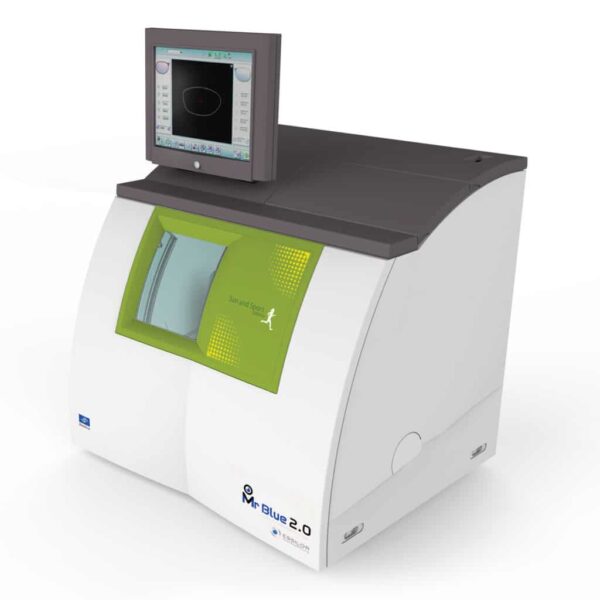
When your standards are high, this is the partner you deserve. A revolution in edging, Briot Couture gives you a flawless finish with every frame – whatever the style, shape or curve. 3D pre-visualization lets you see your results before you even start working. TrueFit technology calculates curvatures to ensure seamless lens-frame pairing. Additionally, new sensors coupled with advanced software maintain constant pressure on the lens, reducing cycle time with no risk of misalignment – especially on hydrophobic lenses.Wavefront, The Future Of Blocking Briot Couture Lens Finishing System Our exclusive wavefront lens analysis allows you to see progressive lens designs on the frame trace before you even cut the lens, giving you the opportunity to validate that the shape and lens design are compatible without wasting time or money redoing the job. Shape Creation Limited Only By Your Imagination With Smart Design Milling And Shelf Beveling Create complex shapes and a true shelf bevel for high base-curve wrap frames with the Smart Design Milling feature in the Briot Couture. Exclusive TrueScan High-Curve Tracing Featuring our patented TrueScan technology, the Attitude Tracer/Blocker has a specially designed angled probe that will gently measure the contour of even the thinnest, most delicate metal frames or high base-curve wrap frames effortlessly. Brushless Technology For Faster, Quieter Operation Edge lenses faster and more efficiently while also reducing noise with new brusheless motor technology featured on the Evolution. Now, you can plug this edger in anywhere that has a 120V line adding extra placement flexibility in your optical lab. Provide The Best Finish On High Base-Curve Frames With Briot’s Best-Fit Technology Our advanced drive technology in conjunction with a small 90mm diamond wheel allows flawless finishing on high base-curve lenses and complex frames with sharp corners. Damaged Demo Lens? No Problem With Shape Creator 2.0 Accurately reconstruct broken or defective demo lenses with minimal effort using the new Shape Creator 2.0 technology on the Couture Blocker. | Essilor Mr Blue 2.0 Sun & Sport Edition Patternless EdgerFrom Essilor Instruments, Mr Blue Sun & Sport Edition edging system expands your offer:- Produce Chemistrie clips as custom-made sunwear
- Achieve Half Jacket frame coverage for endurance and extreme sports
“Sun & Sport Edition” and its special features are available for every “Mr Blue Sun & Sport Edition” edger order, associated with a new orChemistrie clips :- Generate additional revenues through an alternative to both prescription sunwear and unsatisfactory clip-on sets..
- Magnetic lens layering system: a patented technology that attaches lenses to virtually any prescription eyewear using magnets embedded in the lenses.
- Base curve matched, lightweight, custom made.
Half Jacket frames : Essilor Mr Blue 2.0 Sun & Sport Edition Patternless Edger- Capitalize on the rising popularity of endurance and extreme sports.
- Achieve a wider frames coverage with the partial step bevel inn addition to full high curve, asymmetric bevel, and step bevel.
- A dedicated process and assistance on your machine supported by new tools.
already owned Mr Blue Tracer or Mr Orange Tracer.Mr Blue 2.0 is on the cutting edge of innovation – serving as a genuine ECP partner since its launch. Now featuring a whole range of new functions and even greater flexibility than before, Mr. Blue 2.0 is the perfect solution for:- Working with cutting-edge technology
- Differentiating your offerings
- Optimizing your edging process
- Manufactured by Essilor | CE- and UL-certified
Chemistrie Clips to Bring You a New Innovative Sun Offer- Generate additional revenues through an alternative to both prescription sunwear and unsatisfactory clip-on sets
- Magnetic lens layering system: a patented technology that attaches lenses
to virtually any prescription eyewear using magnets embedded in the lenses
- Base curve matched, lightweight, and custom made
- A specifically-designed process on Mr Blue Sun & Sport Edition together with available materials and support
Half Jacket Frames to Excel in Your Sports Offer- Capitalize on the rising popularity of endurance and extreme sports
- Achieve a wider frames coverage with the partial step bevel(1) in addition to full high curve, asymmetric bevel, and step bevel
- A dedicated process and assistance on your machine supported by new tools
(1) Bevel a portion of the thick lens edge into a step to fit into frames so that only a part of the edge is inserted, and protrusions on the lens hook into indentations in the frame groove | Huvitz HFR-8000 Frame Tracer
The KAISER HFR 8000 Frame Tracer is where efficiency meets versatility, providing efficiency that today’s retail practices require.
The HFR-8000 is part of the widely-acclaimed KAIZER line. KAIZER is the next generation to follow the Huvitz Excelon series and is designed with a wide array of features intended to simplify and perfect in-house lens finishing. The HFR-8000 is a fully automatic frame tracer that performs 3-dimensional tracing. This material-friendly unit can be used in virtually every situation. It provides fast and adaptable tracing for all frame materials and shapes. In fact, it is capable of scanning and digitally filtering 16,0000 points of shape data. The HFR-8000 also features Huvitz Mechatronic Technology. This built-in stereoscopic scan technology provides accurate tracing even on high curve frames. The HFR-8000 is a perfect accompaniment to the HPE-8000 Edger and offers flexibility, precision and quality that can’t be beat.Huvitz HFR-8000 Frame Tracer| racing Type | Automatic 3D Binocular Tracing | | | | Tracing Mode | Auto, Semi-Auto | | | | Tracing Size | Frame ø0.7~3.7in (ø16.0~92.0mm), pattern ø0.7~3.3in (ø16.0~84.0mm) | | | | Frame Material | Metal, Hard Plastic, Soft Plastic | | | | Data Processing | FPD, Frame Curve, Circumference, 3D Angle Concave Shape | | | | Dimensions / Weight | 11.2(W) x 13(D) x 7.5(H)in / 17.6lb (284(W) x 320(D) x 190(H)mm / 8kg) | | | | Power Supply | 100 – 240V, 50 / 60Hz | | | | Power Consumption | 32W |
Features of the HFR-8000 Frame Tracer| ▪ Automatic 3-Dimensional Tracing
▪ Stereoscopic Scan Technology
▪ Material-Friendly
▪ Works With Any Shape | ▪ 16,000 Data Points
▪ Mode Options
▪ Real-Time Data
▪ Dust Free |
| | | Automatic 3-Dimensional Tracing
The HFR-8000 is a fully automatic frame tracer that performs 3-dimensional tracing. | |  | | Stereoscopic Scan Technology
The HFR-8000 features Huvitz Mechatronic Technology. This built-in stereoscopic scan technology provides accurate tracing even on high curve frames. | |  | | Material-Friendly
The HFR-8000 is a material-friendly unit that can be used in virtually every situation. It provides fast and adaptable tracing for all frame materials. | |  | | Works With Any Shape
With this KAIZER-line frame tracer, you can accurately scan concave sand narrow frames as well as frames with sharp edges. | |  | | 16,000 Data Points
One of the reasons the HFR-8000 is so versatile and accurate is because it is capable of scanning and digitally filtering 16,0000 points of shape data. | | | Mode Options
Enjoy complete flexibility with this outstanding tracing unit. Users can select form left-eye, right-eye or complete tracing modes. | |  | | Real-Time Data
With the HFR-8000, there’s no more waiting for data to upload. This unit features Real-Time automatic data transfer to the edger. | | | Dust Free
The HFR-8000 comes with it’s own slide cover to prevent dust accumulation. |
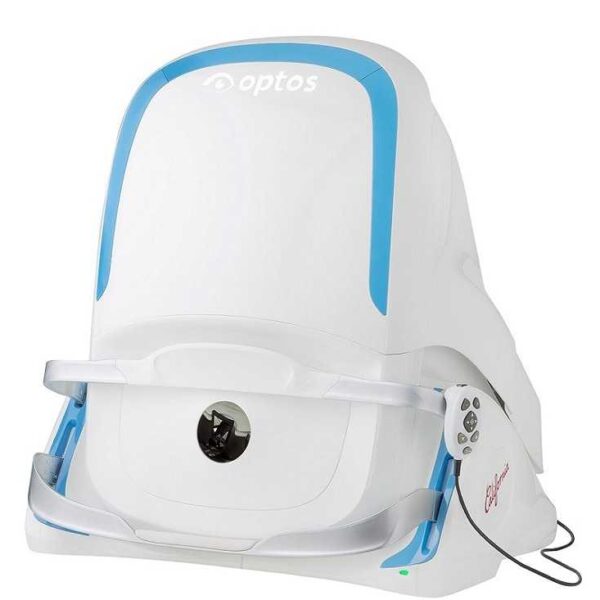
| Optos California RG Ultra-widefield Retinal Imaging SystemEffectively Cure more ocular conditions
Optos introduces its newest ultra-widefield (UWF™) imaging apparatus, California, which make with specific for vitreoretinal specialists and ophthalmologists.The compact desktop device was said to provide increased imaging functionality and has introduced a new imaging modality, indocyanine green angiography, used for imaging the choroidal vasculature, which Optos said was the key in the diagnosis, management, and treatment of certain conditions such as neovascular AMD and ailments with choroidal neovascular membranes.Why California?
With California, Optos has integrated innovative hardware and software technologies allowing professionals to see more, discover more and effectively cure more ocular pathology thus promoting patient wellness. We’re committed to further strengthening our clinical evidence while demonstrating the importance of imaging the entire retina.[su_quote cite=” Dr. David M. Brown” url=”https://houstonretina.com/David-M-Brown-MD”]”If you had another fluorescein camera, then California will fit in the same area if much smaller. It also does autofluorescence, which is helpful for evaluating geographic atrophy,”[/su_quote]New proprietary optical hardware optimizes and maintains the resolution of their optomap images throughout the scan of the retina leading to more clarity at the far periphery.Additionally, comparisons can make between different images or various dates by scrolling through all saved pictures.The Optos California directional retinal imaging apparatus makes it possible for an immediate 200-degree perspective of a patient’s eye at a single scan, supplying a high-resolution picture in under half a second. Additionally, our advanced 3D OCT scanning instrument, the Topcon Triton, has updated software making glaucoma detection and decision making much easier and stronger[su_highlight background=”#f5e791″]With optos California, an optometrist may generate over $9,000 – $15,000 a month. California Billed: $55 each picture for each single patients. Earning money every month with optos California[/su_highlight]
- Compact to reduce space requirements
- New design leads to ease of use and faster image capture
- Non-mydriatic high-resolution imaging through many cataracts and 2mm pupils saves time in busy practices
- Browser-based image review enables simple integration and easy access to your data from any connected pc or tablet in a HIPAA compliant environment
- Interweaved angiography enables parallel capture of fa and icg images without manually switching between imaging modalities
Optos California is available in three models:
California icg design for retinal specialists to maximize management of AMD, uveitic conditions along with other choroidal pathology; it offers the following imaging modalities and image viewing options.
California af was made to facilitate retinal tests and document findings.
California fa was made to help in the identification and management of diabetic eye disease and other cardiovascular ailments.optomap and optomap plus (red and green laser):- Color composite
- green laser View
- red laser View
- optomap af (green laser): autofluorescence
- optomap fa (blue laser): fluorescein angiography
- optomap icg (infra-red): indocyanine green angiography
| Huvitz HMB8000 Manual Blocker
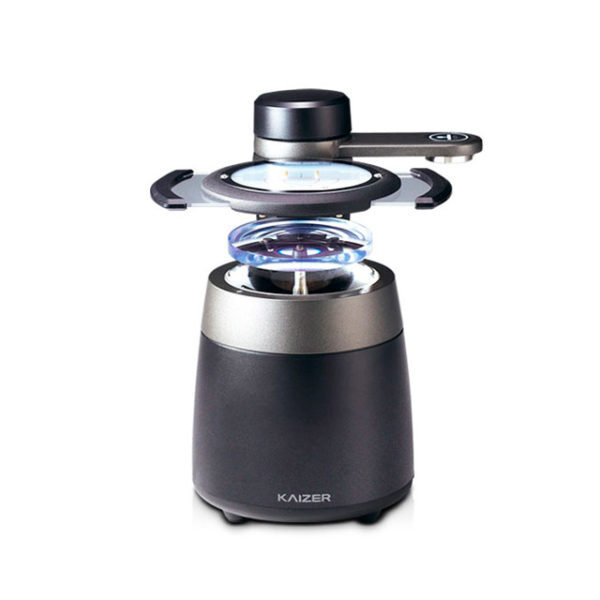
The HMB-8000 manual blocker is part of the Huvitz KAIZER series. Kaizer is the next generation to follow the Huvitz Excelon series and is designed with a wide array of features intended to simplify and perfect in-house lens finishing.The KAIZER series is truly a system like no other featuring top-of-the-line technology and unsurpassed performance. When you select the HMB-8000, you will enjoy a lifetime of LED durability. The integrated brightness control function makes it easy to mark and block any lens—even those with dark tint. The HMB-8000 blocking system is also easy to use and features intuitive graphics with outstanding functionality. With its sleek, compact design and luxurious feel, the HBM-8000 is an outstanding component of the KAIZER series.Features of the HMB-8000 Blocker
▪ Compatible with High-End Finishing Systems
▪ Adjustable LED Intensity
▪ Small Footprint
▪ Easy-to-Use
▪ Energy Efficient
▪ VersatilityKAIZER Compatible
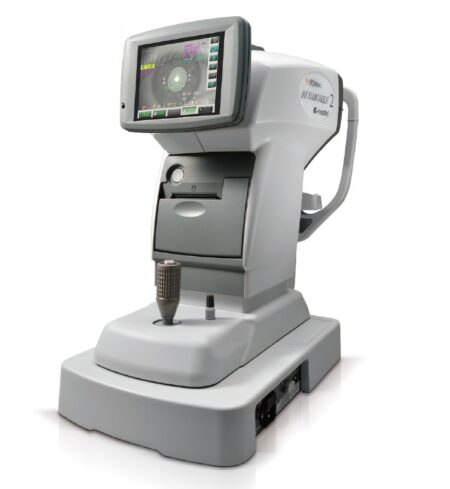
The HMB-8000 manual blocker is part of the Huvitz KAIZER series. Kaizer is the next generation to follow the Huvitz Excelon series and is designed with a wide array of features intended to simplify and perfect in-house lens finishing. The KAIZER series is truly a system like no other featuring top-of-the-line technology and unsurpassed performance.The Huvitz HAB-8000 is a one-stop solution, combining the functions of a tracer, lensmeter, and blocker in one powerful machine. Simply place the lens in position and the HAB-8000 will do the rest. The HAB-8000 is user-friendly enough for in-office use as well as robust enough for higher-volume settings. In fact, with the HAB-8000 you can process up to four jobs at the same time while connecting to up two separate edgers and a drill unit. The possibilities are endless. A 10.4-inch high-resolution touch screen monitor allows operators to control all of the system's functions. Featuring Automatic Lens Center Recognition, the HAB-8000 automatically detects the lens shape and knows what type of lens you’re using. The integrated high-performance lensmeter automatically recognizes the lens as it is set in position. Whether it’s a progressive, bi-focal, or other lens, there’s no need for marking with the HAB-8000. In addition, this high-end Huvitz model offers Digital Scan Hole Detection, Advanced 3D Tracing, Drag-and-Drop Hole Editing, Real-Time Data Transmission and so much more. Fully automated lens centering and blocking is now available at the push of a button. | Righton BON Retinomax K-Plus 5 (Autoref Keratometer)Retinomax Series, the world’s leading handheld Ref and Refract Keratometer, delivers wide measurement range on par with table type Ref, with greater mobility, stability and accuracy.The Retinomax series is widely used as a global standard device for pediatric, screening, medical care in remote areas, disaster area and wide range of ophthalmic scene.Current informatical society, eye fatigue, one of the typical modern diseases cause by eye accommodation issue is now easily discover by ACOMOREF2 series during screening basis. Accommodative Micro Fluctuation result will show in graph for easy reading, plus opacity detection function makes ACOMOREF2 the world first multi-functional Refractometer.Features:Righton BON Retinomax K-Plus 5 (Autoref Keratometer)View Finder – With view finder observation, no limit of operator age. Diopter adjustable range is +/-8D the same as Retinomax3. View finder arm angle is changeable of 0-135 degrees, making measurement easy regardless of patient’s position or posture. Adjustable diopter +/- 8D.Wider Eye Piece – Eye piece relief is 48mm from 32.2mm so that enable to look inside image while even looking at outside. No need to stick eye to the eyepiece all the time.Improved battery life – At 180 minutes, the battery capacity is now twice that of conventional modelsAutomatic Axis Compensation and Extended Measurement Range – Not only does the device let examiner know the cylinder axis angle, but it can also be automatically adjusted if it is not levelNew Child Mode – While the measurement is being taken, a melody plays continually to keep children’s attention. A constantly changing color display, both on the outside and inside target the device, also keeps children involved during the process.Even lighter and featuring an easy-to-hold gripRetinomax3 969g → Retinomax Screeen 960g -9gRetinomax K-plus3 999g → Retinomax K+Screeen 970g -29gREFRetinomax 5, Retinomax K+ Screeen −20D〜+23D |







Reviews
There are no reviews yet.